
ABOUT CLT®
What is CLT® (Coordinative Locomotor Training)?
A locomotion-based training and treatment concept that restores natural coordination to improve movement, reduce pain, and enhance performance. A precise, problem-solving approach to movement—built on coordination, not isolated muscle function.


A Coordination-Based Approach to Pain and Dysfunction
CLT® is a training and treatment concept that improves movement by restoring the body’s natural coordination patterns used in human locomotion (walking and running). It addresses locomotor system problems—such as pain, instability, reduced mobility, or inefficient movement—through a problem-solving approach using precisely defined three-dimensional movement patterns.
CLT® was developed as an innovation based on the PNF concept by Britta Dietz (IPNFA® Advanced Instructor). She connected PNF principles with real locomotion and sport experience, using Sprinter and Skater coordinations and their combinations (e.g., skiing, skipping,)
How CLT® works
At its core, CLT® is a facilitation concept. That means we guide the nervous system toward efficient movement without relying on isolated, voluntary “muscle actions”. Instead, the body reorganizes movement automatically through coordinated patterns that influence:
- posture and alignment
- balance and antigravity control
- trunk stability
- efficient locomotion
This facilitation is supported by a combination of efferent and afferent input (Kabat, 1950), using exteroceptive, proprioceptive, and telereceptive stimuli. The nervous system receives continuous information and can self-organize a better, more efficient movement strategy.
In practice, CLT® can be applied hands-on and/or hands-off, depending on the client and the goal. In personalized sessions, a certified specialist uses CLT® to help restore:
- stability and trunk control
- strength as coordinated whole-body force
- mobility and controlled mobility
- balance and ease of movement
- pain reduction
A key feature is that CLT® targets coordinated structures—not just a single painful area. When the function of one segment improves within a coordinated pattern, the whole system reorganizes.
Movement Patterns (what we use)
CLT® primarily works with Sprinter and Skater coordinations, plus their functional combinations, including gait/sport-like reciprocal patterns (skiing, skipping)
A practical advantage is working with one limb in a closed chain (foot on the floor or on the wall). In this setup, therapists and trainers can more clearly predict the direction and intensity of the client’s response and maximize the desired effect—because the whole body must coordinate around a stable contact point.
CLT® works with muscle synergies through Sprinter/Skater coordinations by controlling key points—specifically the position of the tuber ossis ischii and the angulus inferior scapulae. This helps address and correct muscular imbalances and supports a more efficient neurological response, resulting in better whole-body muscle coordination for normal movement.
During treatment, we also use Security Lines®, which immediately engage the inner and outer core muscle systems. When core stability and strength are established, the whole body typically responds with better balance, improved alignment, and smoother movement.
CLT® also supports the full progression of motor control (useful in rehabilitation and performance):
- Stability / Security (antigravity control, trunk organization)
- Movement on a stable base (linking coordinated structures)
- Controlled mobility (control through range and timing)
- Skill / integration (transfer into gait, sport, and daily life)


Why CLT®works
The science behind the results
Coordinated movement requires the nervous system to manage many joints and muscle groups at the same time. This is best achieved through muscle synergies—functional “teams” of muscles working together (Bernstein, 1967; Bosch, 2015).
CLT® builds these synergies through Sprinter/Skater patterns so the body learns efficient, goal-directed movement by:
- combining muscle responses into functional units
- using the mechanical advantages of limbs and trunk
- integrating continuous sensory feedback during movement (M.Lee)
This aligns with concepts such as the Dynamic Engine Theory (Gracovetsky, 1988), where coordinated movement results from an interplay of all body segments through self-organization (Williams et al., 1999).
CLT® helps people move with less pain and more efficiency by rebuilding whole-body coordination through natural locomotor patterns—so the trunk becomes stable quietly, and the limbs can move freely and powerfully.
Do you want to become a CLT® practitioner?
Learn to apply locomotion-based coordination principles in rehabilitation and performance settings.
CLT® A+B Course
CLT® For Rehabilitation
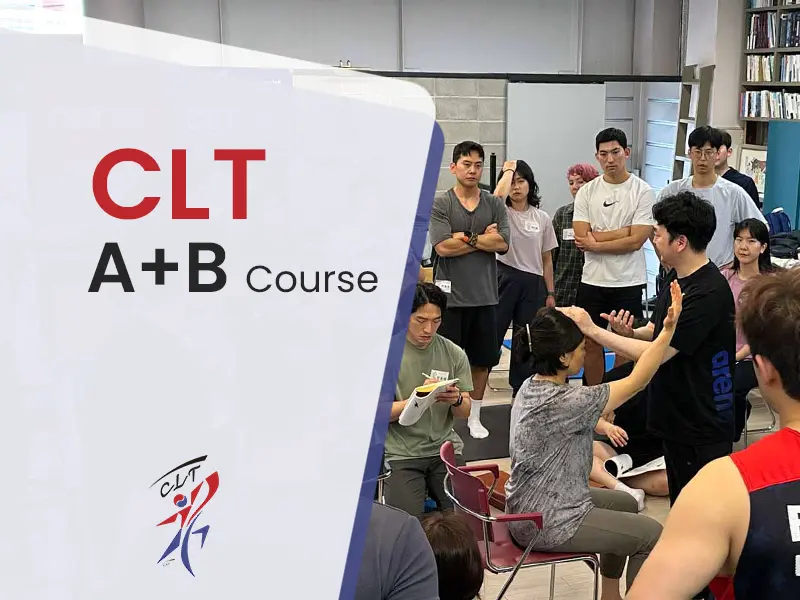
Learn how to recognize, facilitate, and apply locomotion-based coordination patterns in rehabilitation and training.
- Pain reduction
- Improved trunk stability
- Restored mobility and control
- Efficient motor learning
- Whole-body coordination
CLT® C Course
CLT® For Rehabilitation

Deepen your expertise and learn to design treatment strategies for real-world movement problems.
- Clinical reasoning
- Case-based application
- Treatment design
- Problem-solving skills
- Advanced coordination
CLT® X Course
CLT® For Training & Performance

Transform treatment into long-term results through structured training systems.
- Improved coordination and agility
- Enhanced sport performance
- Injury prevention
- Functional strength transfer
- Scalable training systems